

Hi Multis
It’s good to have you back here for the Overview Of The Week. Take your morning coffee or evening tea, because it’s about to start!

Articles In The Past Weeks
This is the fourth article this week.
In the first article of the week, we looked at the Best Buys Now XXL.
Adyen’s stock price dropped about 20% after earnings. In my article, I analyzed whether that was warranted.
The third article of the week focused on Shopify’s earnings.
Memes Of The Week
Let’s check the meme harvest of this week.
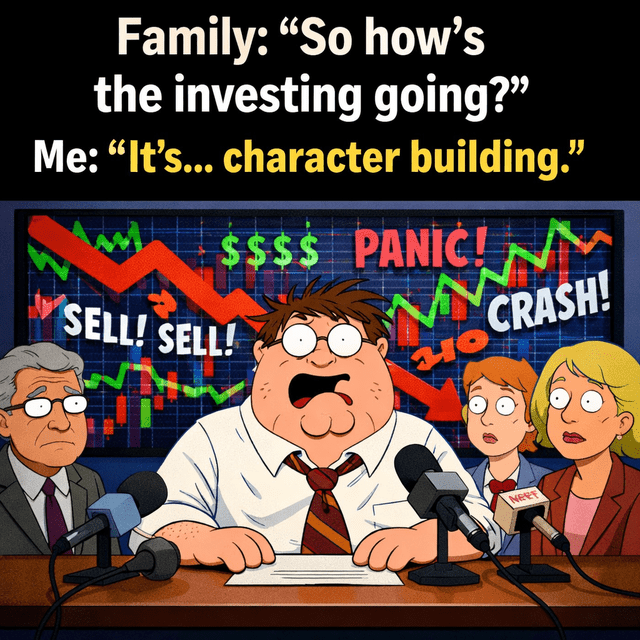
This one hits home recently.
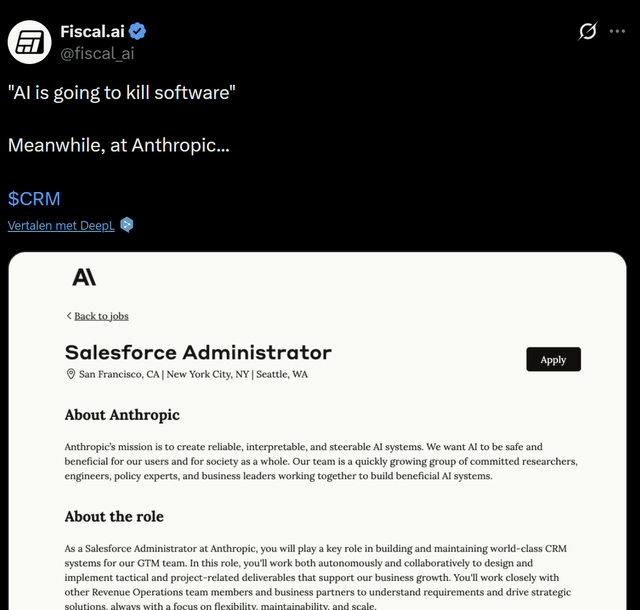
This is not a meme, but still funny.
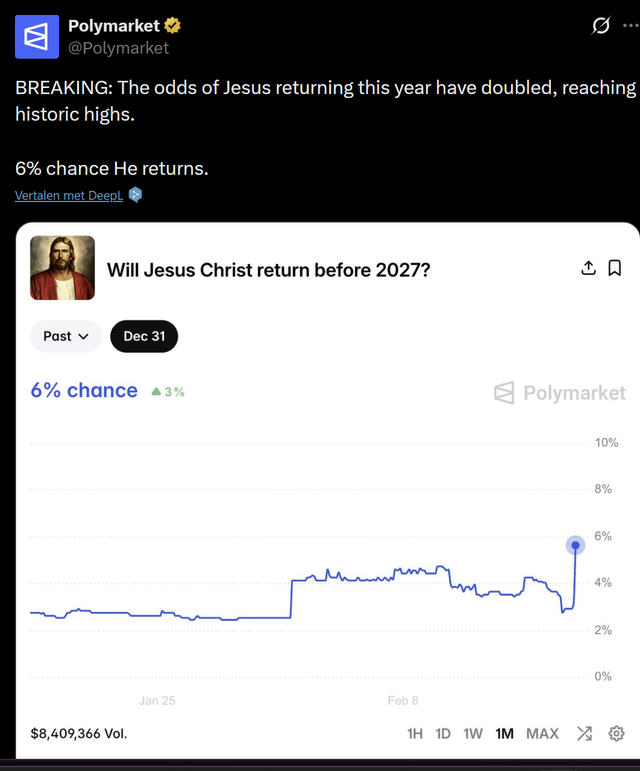
This one is not about investing, but nowadays, you can bet on everything. That brought this funny situation to the light.
Interesting Podcasts Or Books
At ValueX Klosters, I got to know Bogumil Baranowski better. Here you see us together.

Bogumil is the host of the outstanding investing podcast Talking Billions. This week, there was a rerun of an older episode I had not heard yet, with the organizer of ValueX Klosters, Guy Spier.
You can listen to the episode here.
The markets in the past week
It may not feel like that for some, as several Potential Multibaggers have not been doing great lately, but this week the indexes were up. The Russell 2000 was up 0.65%, the S&P 500 1.07% and the Nasdaq 1.51%.
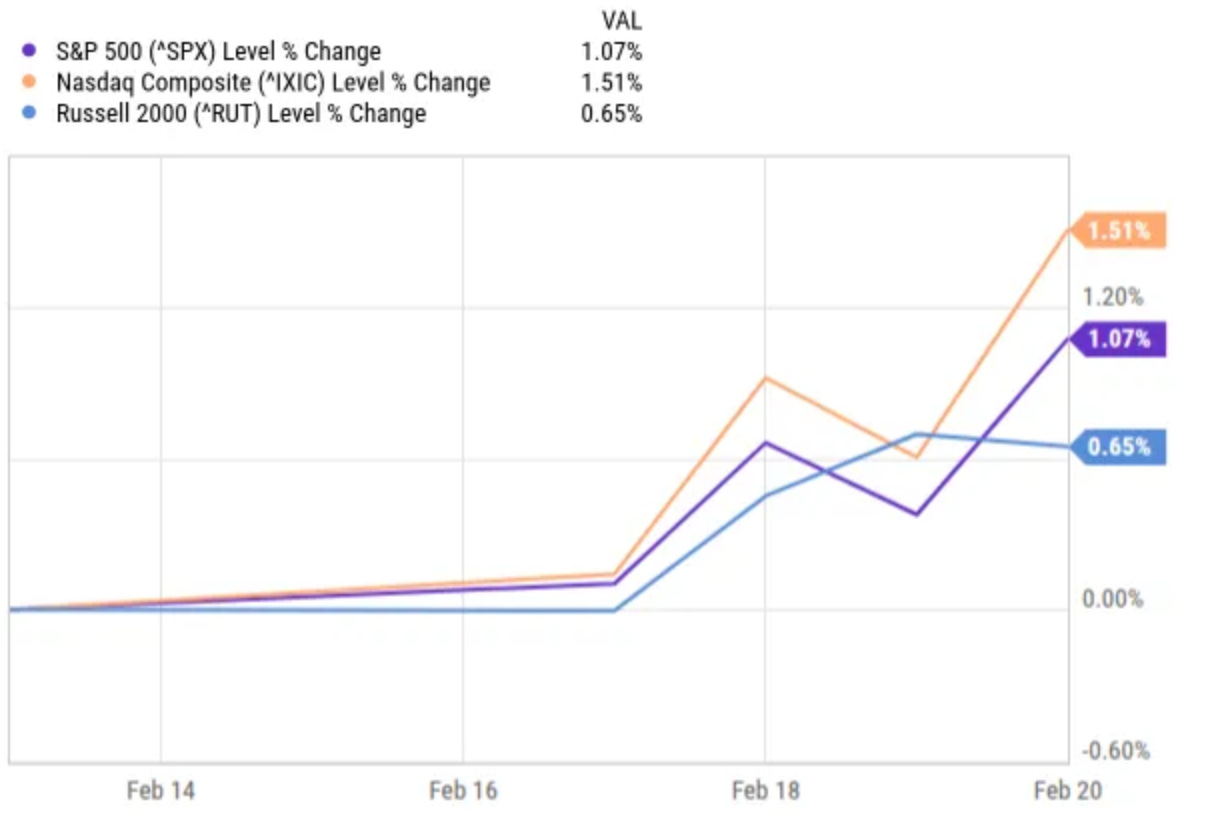
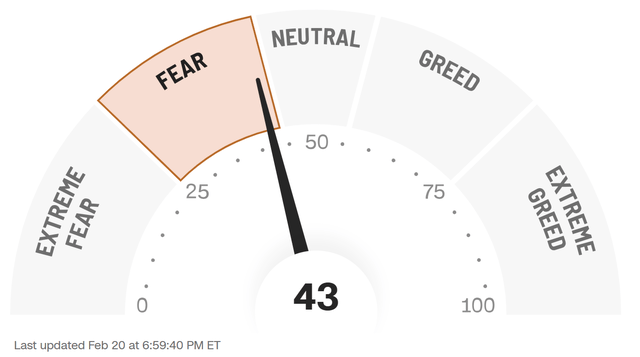
Despite the jump, the Greed & Fear Index remained in Fear territory.
Quick Facts
1. Mega-Cap Tech: Most Under-Owned In 17 Years
Morgan Stanley put out an interesting note this week. After reviewing fourth-quarter 13F filings, they found that mega-cap tech stocks are the most under-owned by institutional investors in 17 years. The gap versus the S&P 500 widened to -155 basis points by the end of the quarter.
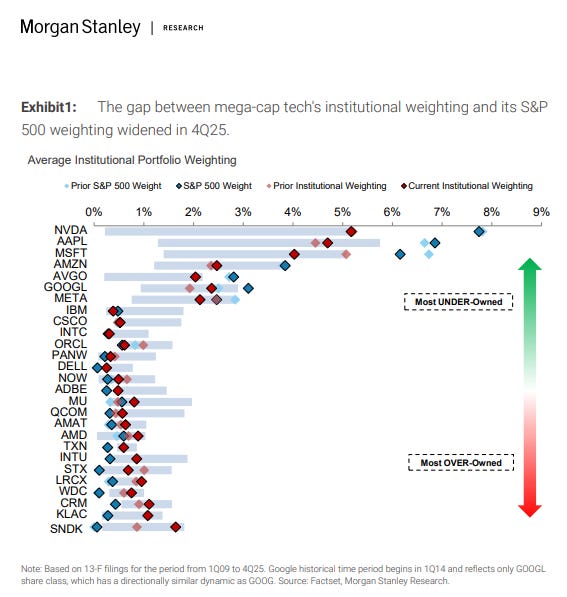
Nvidia is the number one most under-owned name. It shows a -2.57% gap between its S&P 500 weighting and the holdings of active funds. Apple (-2.16%), Microsoft (-2.13%), and Amazon (-1.37%) follow.
These are the biggest, most dominant companies on the planet, and active managers are still underweight them. That’s remarkable.
What’s even more interesting is where institutional money went. There’s a clear bias toward AI picks-and-shovels names: SanDisk, KLA Corp, Western Digital Corp, Lam Research Company, Seagate Technology are all semiconductor hardware companies and overowned. Software names like ServiceNow, Palo Alto Networks, and Adobe are notably under-owned too.
So institutions have been chasing the AI infrastructure picks while having a lower exposure to both the mega-caps that actually generate most of the AI revenue and the software companies that will integrate AI into their platforms.
The results of this behavior are clear in the YTD chart of the Mag7 vs. the index.
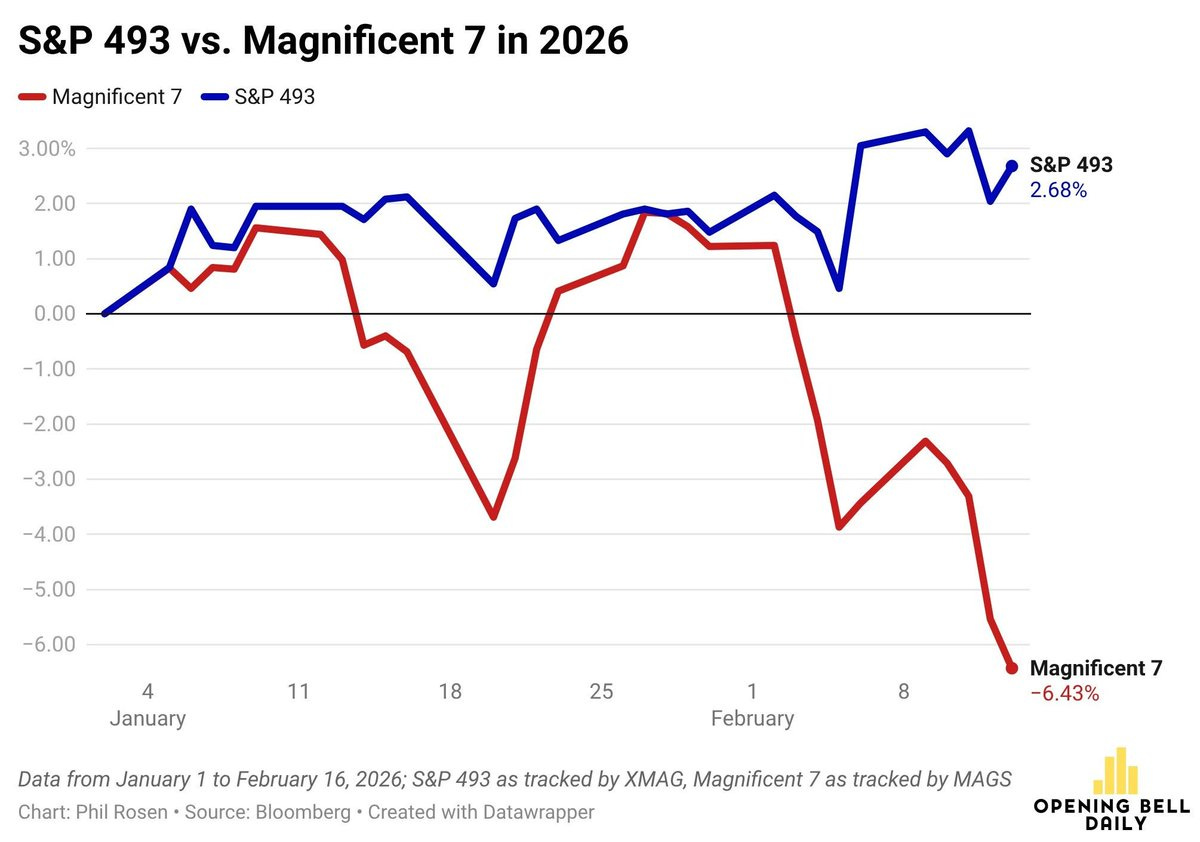
Now, the year is only about a month and a half old, so don’t take this too serious. But it is a pattern I’ve seen before. Fund managers are afraid to have big positions in the obvious winners because they want to show they’re “different.” Nobody gets fired for underweighting Nvidia, so to speak.
It also ties into what I’ve been writing about the anti-bubble. The narrative is so strong that AI will destroy everything that isn’t a chip or LLM, that money flows into hardware and out of everything else. This is a data point worth keeping in your head. When the crowd is on one side of the boat, it’s usually worth checking the other side.
2. Individual Investors Are Buying The Software Dip
Vanda Research released this chart that shows that individual investors invested a record $176 million in IGV, the iShares Expanded Tech-Software ETF, over the past month. That’s more than double the previous peak from late 2024 and 12 times higher than where it was at the start of 2026.
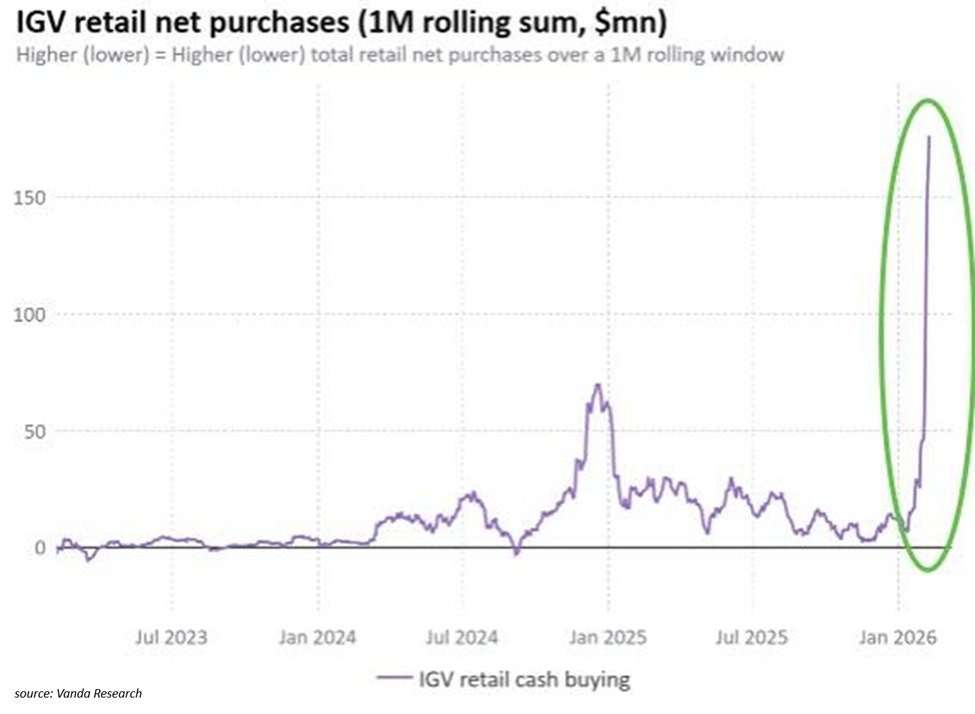
It shows the opposite of what my previous point showed. Unlike active funds, individual investors are backing up the truck on software stocks.
Software stocks dropped about 33% from their October 2025 peak and had their worst January since 2008. So this is classic buy-the-dip behavior, and it’s happening at a scale we haven’t seen before in this ETF.
Software is getting thrown out like it’s worthless because AI will supposedly replace it all. If you believe, as I do, that the best software companies will adapt and thrive, then buying at -33% from the peak is probably a good idea.
What’s also interesting: Amazon has overtaken Nvidia as the most purchased stock by individual investors over the last few sessions, after Amazon’s post-earnings decline.
I know that many look down on “retail investors” (a term I hate because it’s so condescending). But is it so irrational to buy now that tech trades at a lower forward PE than industrials and consumer staples?
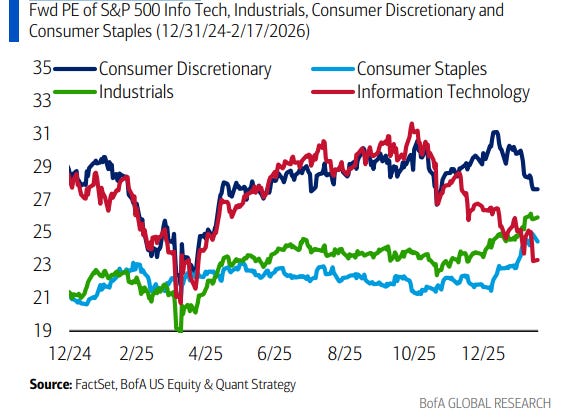
This illustrates this market perfectly. Of course, the market can remain irrational for a long time, so don’t hold your breath on the tech return. But eventually, buying the best tech companies at lower multiples looks like a great strategy at this point.
3. Too Much Capex?
Bank of America’s Global Fund Manager Survey had a chart that caught my attention.
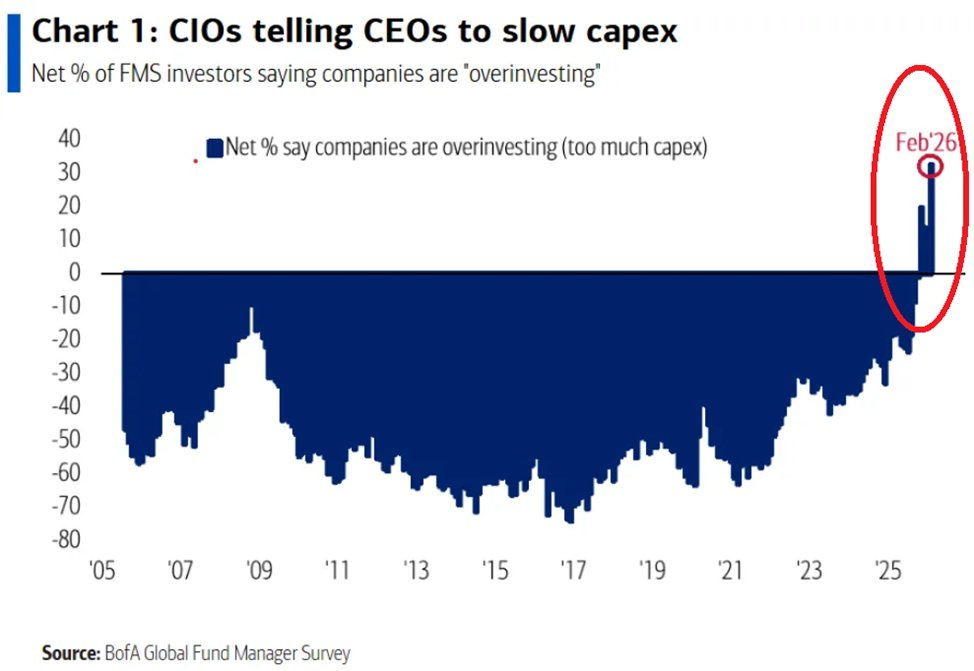
For the first time in 20 years, a positive percentage of fund managers say companies are overinvesting. 35% of them now think capex is too high. For 20 years, fund managers have asked companies to invest more. Now they want them to stop.
The reason is obvious: AI spending. Meta, Microsoft, Alphabet, Amazon... they’ve all announced massive capex budgets for AI infrastructure and it seems that Wall Street is getting nervous.
On top of that, 30% of the fund managers see AI capex as the most likely source of a credit crisis. And 25% view the “AI bubble” as the top tail risk to markets.
On one hand, I understand the concern. When every hyperscaler is spending nearly or more than $100 billion to build data centers, you can’t help but wonder if they are not overspending.
On the other hand, I’ve been saying for a long time that I think AI spending will be justified. The difference with the telecom bubble is that AI is already generating real revenue and profit.
Jensen Huang likes to say that the cost of being too late is much higher than the cost of being too early. He’s obviously talking his own book, but that doesn’t mean he’s wrong.
4. The AI Bubble Reminder
Someone posted this Google Trends chart comparing search interest for “WordPress” versus “Claude Code” over the past 12 months.
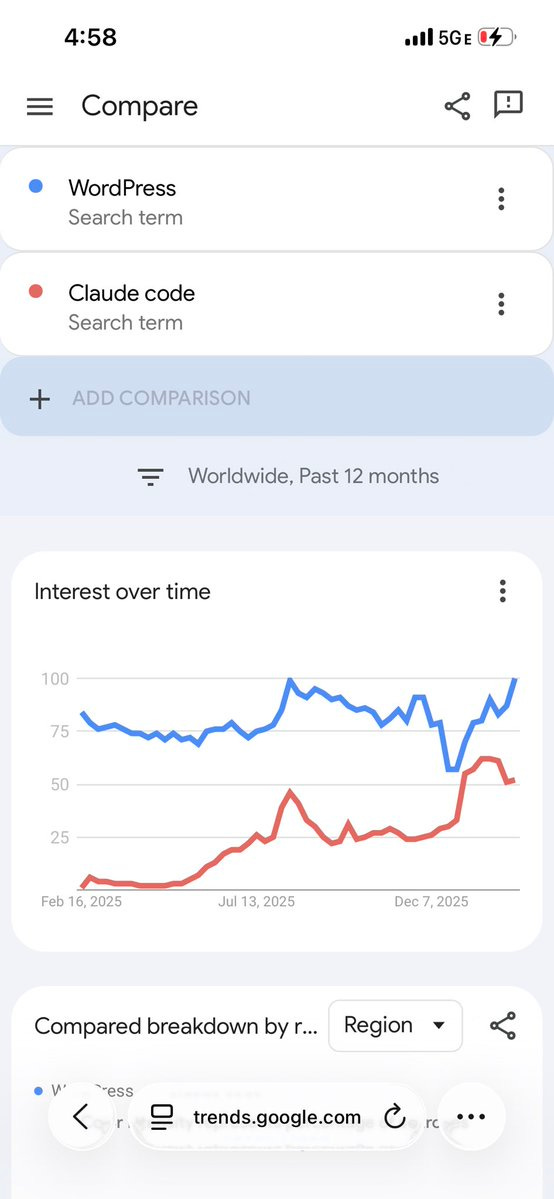
He added: “Reminder that you’re in a bubble.”
WordPress powers about 43% of all websites and it has been around since 2003. Many of us are in a bubble, thinking AI is omnipresent, but this shows that we are the exception, not the rule.
Don’t think the entire world has moved to AI coding tools yet. The real world doesn’t work like that. It’s slow to adapt to new changes. Of course, implementation speed is getting faster with every new technology, but it still takes time. The early adopters are loud but they are still in a bubble.
This chart shows all the people who have never used AI.
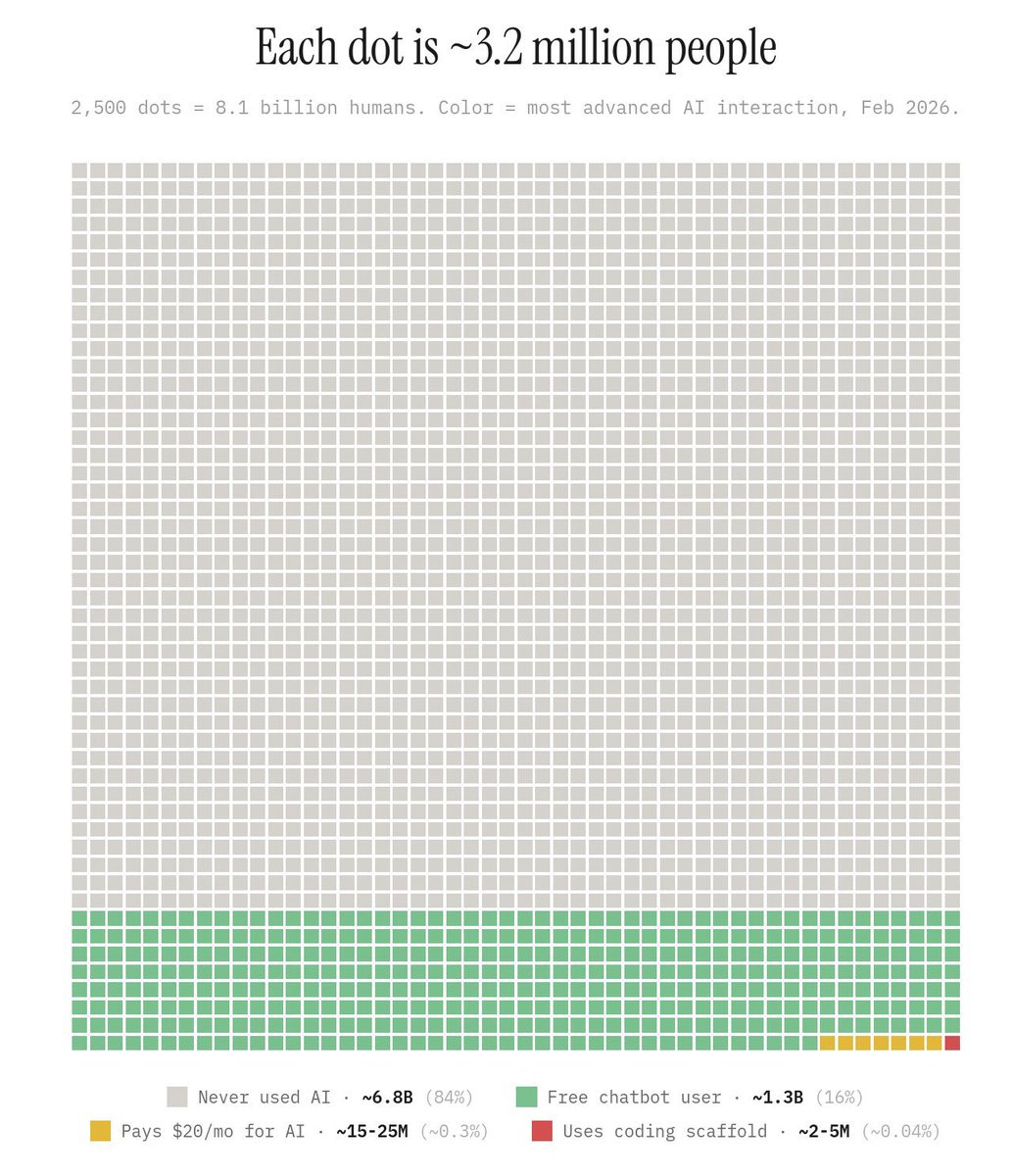
Don’t get caught up too much in your own bubble. Just 0.3% pays $20 per month for AI. This shows you how early we still are.
5. The Put-Call Ratio Nonsense
This chart is going around on X, and the comments around it are hilarious.
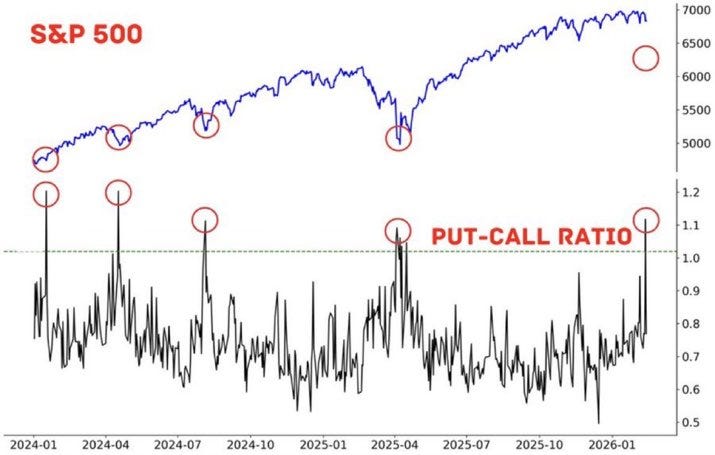
People are sharing it with scary captions about how the put-call ratio is spiking and therefore a big sell-off is coming.
There’s just one small problem. Look at the chart. Every single time the put-call ratio spiked above 1.0 (circled in red), it marked a bottom, not a top. The S&P 500 rallied after each spike.
And yet people are sharing this as a bearish signal.
A high put-call ratio means more people are buying puts (downside protection) than calls (upside bets). In other words, they are scared. Historically, that has been a good time to buy, not to sell.
Now, does that guarantee the same thing will happen this time? Of course not. These indicators are just data points and should never be looked at in isolation.
It also tells you a lot about the current mood. People want to be bearish right now. The AI-will-kill-everything mood, the Mag 7 sell-off, the capex worries... People will take anything and interpret it negatively. Fear sells, but it doesn’t always make you money.
Do you want to read the rest of this article?
Become a paying member of Potential Multibaggers!
(If you already are, just scroll past this)
What do you get as a member?
✍️ Multiple high-quality articles per week
📚 Full access to our entire library of deep-insight articles
🔎 Full investment cases
📊 Access to the Private Community
🎥 Regular Webinars
📈 The Best Buys Now every month
✍️ The Overview Of The Week each Sunday
🔎 Deep earnings analysis
📊 The 10 Best Stocks for 2026 (the selection for 2025 beat the S&P by 54%!)
Many Multis say that the community alone is already worth the price, but you get so much more.
Go to this page.
Subscribe to the annual plan.