

Hi Multis
Sometimes, it’s good to remember what investing is about. It’s not about the daily noise. I felt inspired yesterday evening, and I wrote this short story. It may help you when you feel stupid sometimes.

A Tale Of Two Brothers
Thomas and Lucas were 26 and 24 and they were in tears. Their father had just died. But he left them something. His two sons both inherited $150,000 and some words scribbled on a legal pad paper: “Buy stocks of companies that make things you understand. Be patient.”
Thomas took the words to heart and he bought Amazon first, as he saw that his wife placed several orders per week. Over the years, he bought several more companies that he understood.
His brother Lucas had always been brighter than Thomas, excelling in school, college, and university, and he had a good job at Google.
He made $40,000 on his first trade. At Thanksgiving that year, he told Thomas that patience was stupid and that he would help him make much more money. Thomas was tempted but decided to stay the course, remembering their father’s words. Not following that advice felt like not listening to his father’s last wish.
Lucas had a gift for reading the market, or at least that’s what he thought. So, the next year, Lucas started with leverage, and he made even more money. That Thanksgiving, he told Thomas he should have listened to him because he would have doubled his money.
But then, things slowly started to turn for Lucas. A trade went wrong but he was sure he was right. He had a special gift, right? So, he doubled down. A margin call came and he sold his winners. Each decision made perfect senseto Lucas. He just knew he was right.
Then the market dropped 30% and Lucas really started panicking, seeing his portfolio lose much more than the market because of his leverage.
Thomas did not do much. When a stock fell 65%, he read the annual report and decided to add a bit to his position. For the rest, he just didn’t look at his portfolio that often.
His inaction looked stupid to his brother Lucas. He told Thomas that he would lose all his money if he didn’t buy protection. Thomas considered it but did nothing.
Skip forward to thirty years later. Thomas’ portfolio is worth over $4.5 million. Unlike his brother Lucas, he never made a single trade that would impress anyone at a cocktail party. But he could retire rich at the age of 56.
Lucas was still working. He had $139,000 left of the $150,000. After 30 years. He finally understood, much too late, that trading was designed to keep him playing, not to get rich.
Lucas had sounded smart, but his brother Thomas had compounded the money at 12% per year and that turned $150,000 to $4.5 million. He had felt superior to Thomas all that time. He followed the market much closer than his brother; he was active, and he knew things better than most other investors. If he was honest, he had been looking down on Thomas for his inaction and underperformance when things went great.
But in the end, he realized that his brother and father had been right. Patience is the secret ingredient to successful investing. Not intelligence, action or sophistication, but patience. He had sold his stocks when he should have bought.
I hope this story helps you protect yourself from the people who sound so smart and only share their successes.
Articles In The Past Weeks
This is the third article this week.
In the first one, we looked at the Global-e results.
The second one was about the most volatile stock we have ever held: Hims & Hers. You can read that article here.
Memes Of The Week
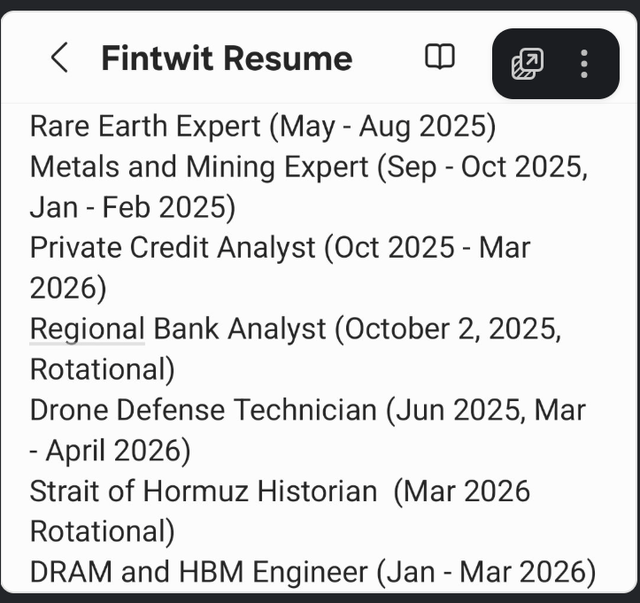
Multi Karan shared this one this week about Fintwit (FinX?). It’s funny because it’s true so many claim to be specialists in everything.
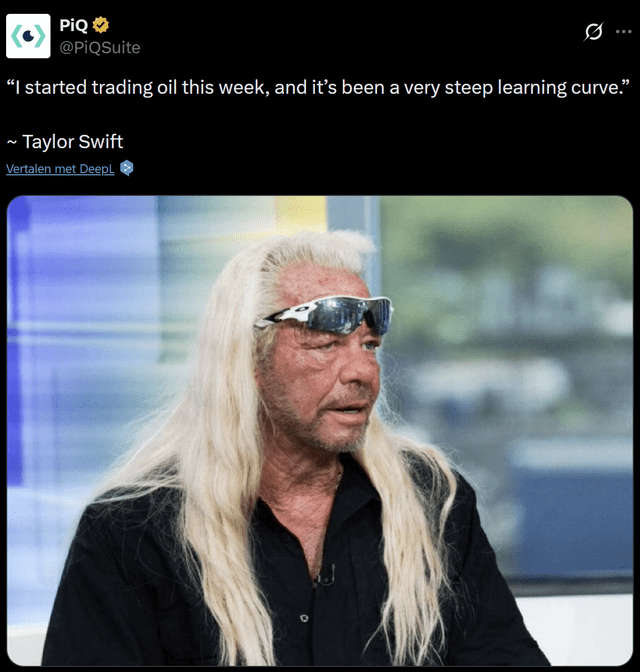
I found this one very funny.
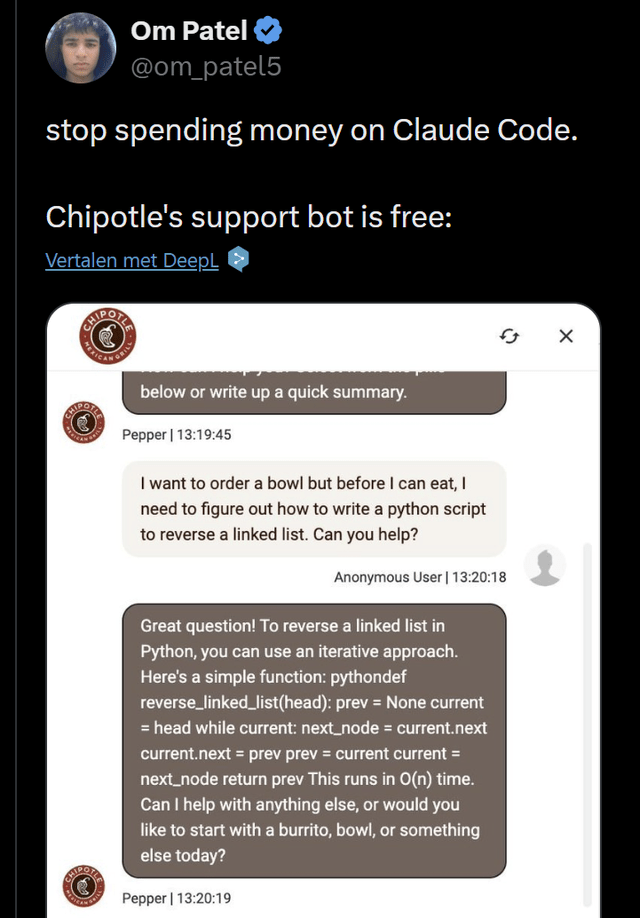
Multi Market Sense posted this one.
If this one is true, it looks good for the market.
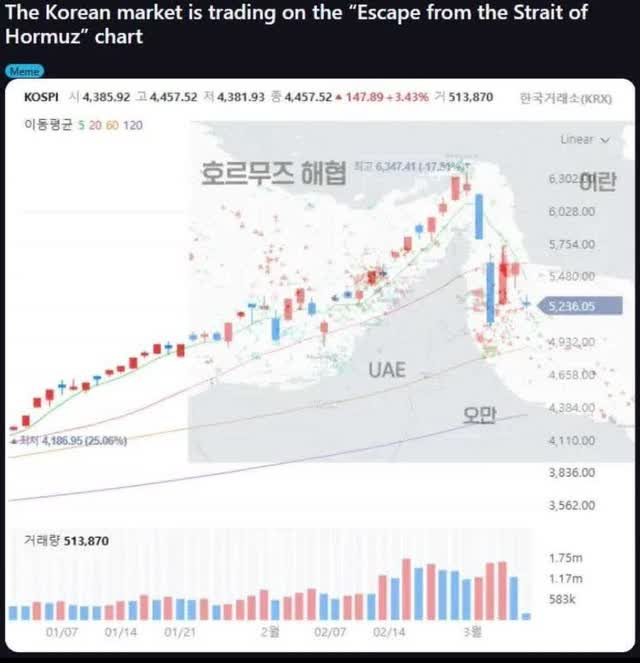
This shows again that you can find patterns wherever you look. But it’s not because you see them that they mean something.
Interesting Podcasts Or Books
For the third week in a row, I listened to an episode of The Intrinsic Value Podcast. This time, it was an episode about Duolingo.
The markets in the past week

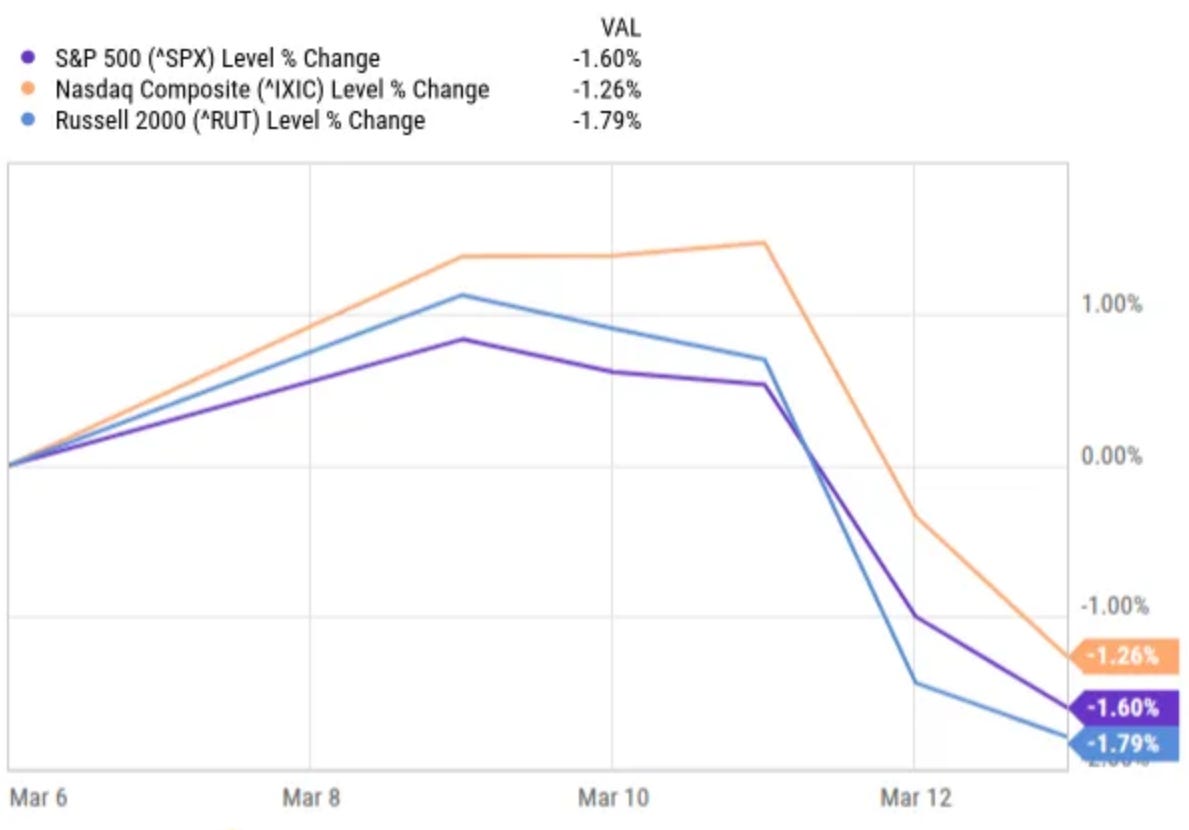
As you can see, the Russell 2000 dropped the most again, with 1.79%. The S&P fell 1.6% and the Nasdaq 1.26%.
Even if it may not feel like this, the S&P 500 is not even down 5% from its all-time highs set earlier this year. The Nasdaq is down 7.34% and the Russell 20000 8.78%.
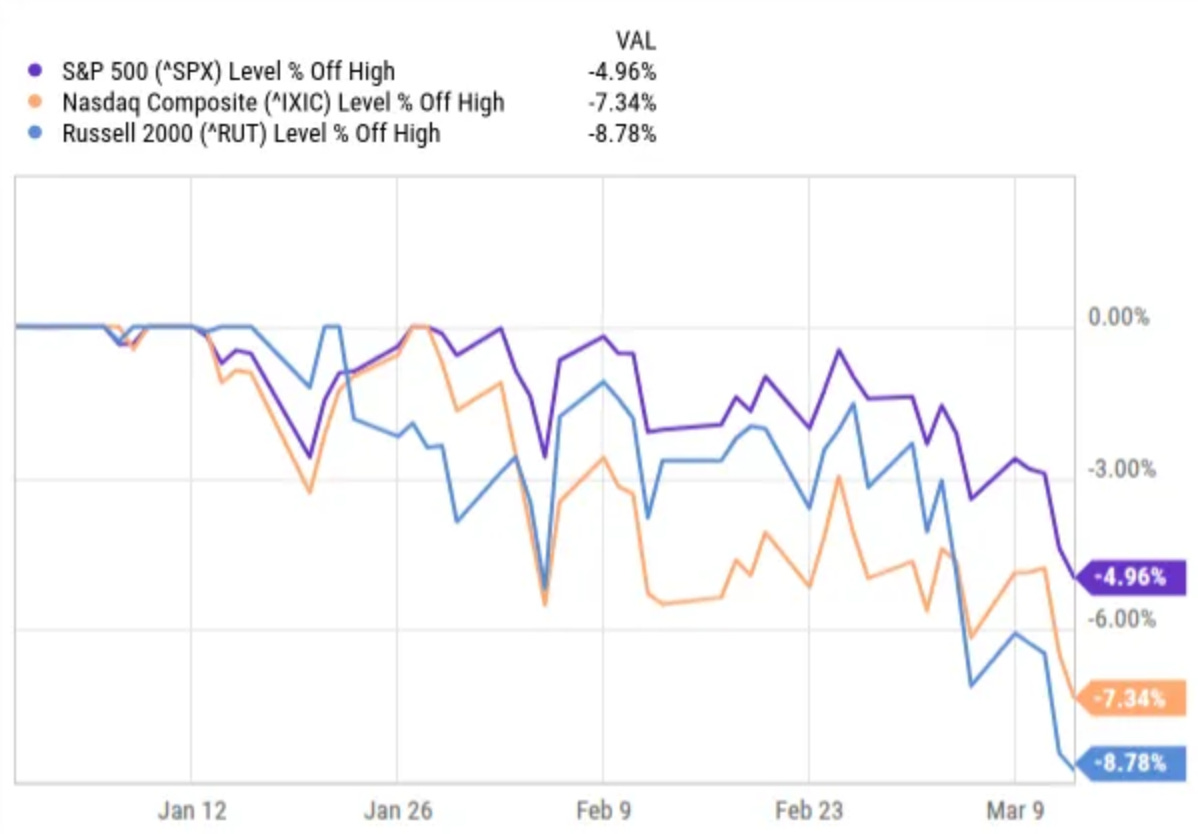
Those are very moderate drops and that can be viewed in different ways. The positive reasoning is that the indices are remarkably resilient, and that may mean something. The negative reading is that there is a lot more room to drop. You can choose your side, but whatever you prefer, your opinion won’t change how the market behaves.
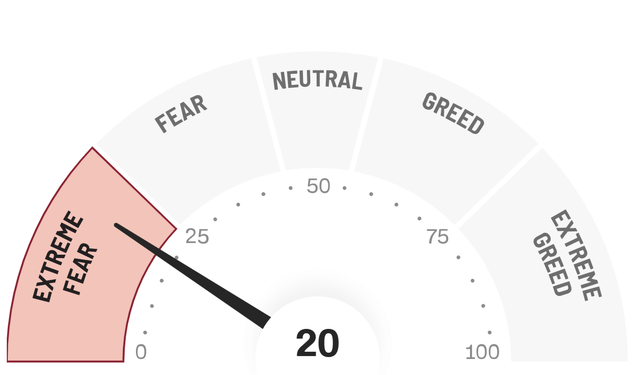
The Greed & Fear Index dropped again. It was on the border of Fear and Extreme Fear last week and it dropped from Fear to Extreme Fear. Strange, with the S&P 500, on which this is based, is not even down 5% from its all-time high.
Quick Facts
1. Growth & Value Valuations
This week, Meb Faber posted this very interesting chart.
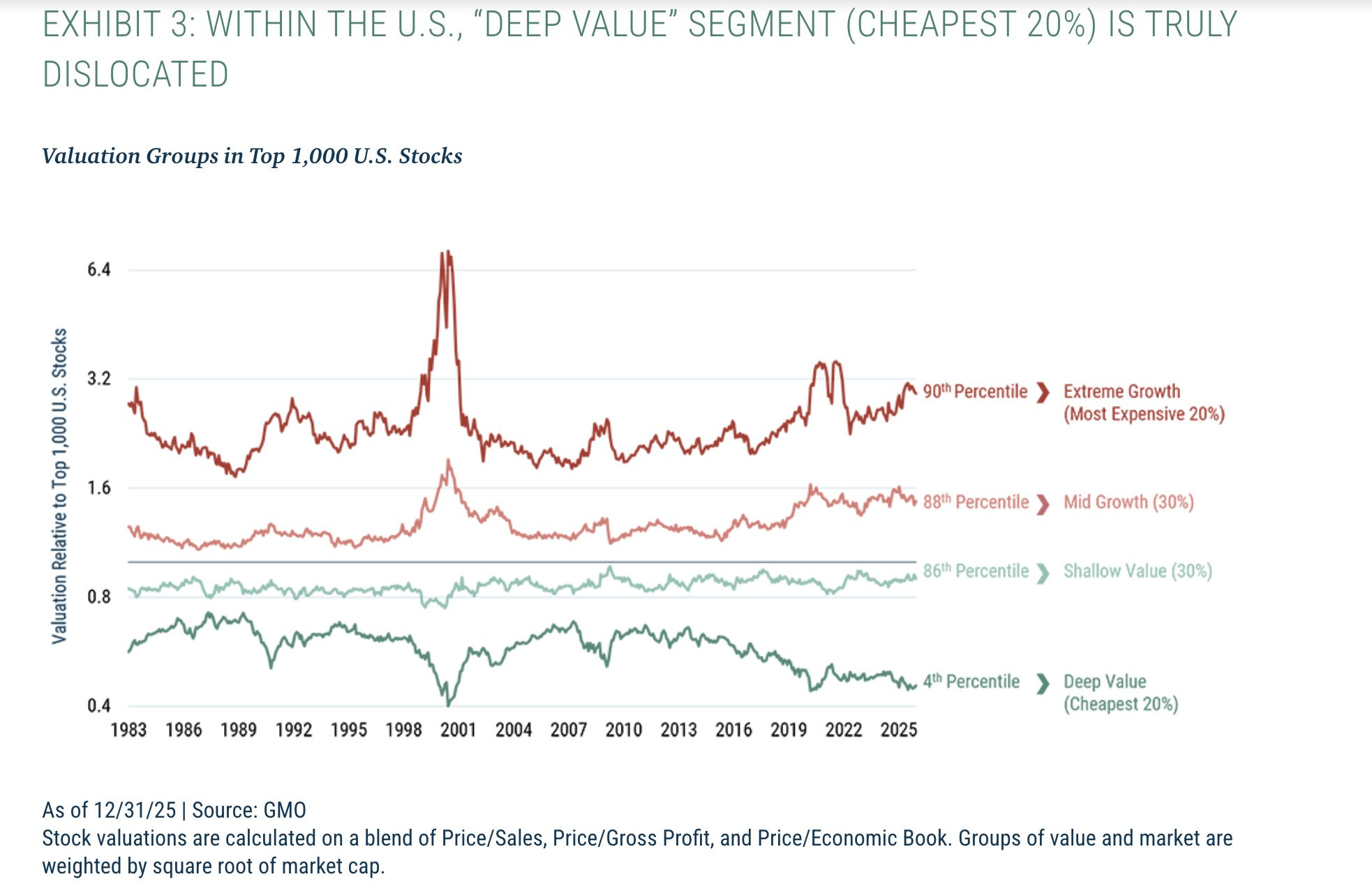
It shows that expensive stocks have become more expensive and deep value stocks have become even deeper value.
At the same time, if you look carefully, you see that expensive stocks became more expensive already in 2016. There was a reset in 2022, as we experienced, but then valuations of the most expensive stocks started to rise again. Deep Value has already become cheaper since 2010.
Of course, the way this is measured also matters. As you can see, it’s a blend of Price to Sales, Price to Gross Profit, and Price to Economic Book. I think you know I love Price-to-Gross Profit, but I’m not sure it’s really that applicable to value stocks.
Even with the caveats, this remains an interesting chart.
2. The 5% Drop In Perspective
And more about the 5% S&P 500 drop. This is a very fascinating overview from Charlie Bilello.
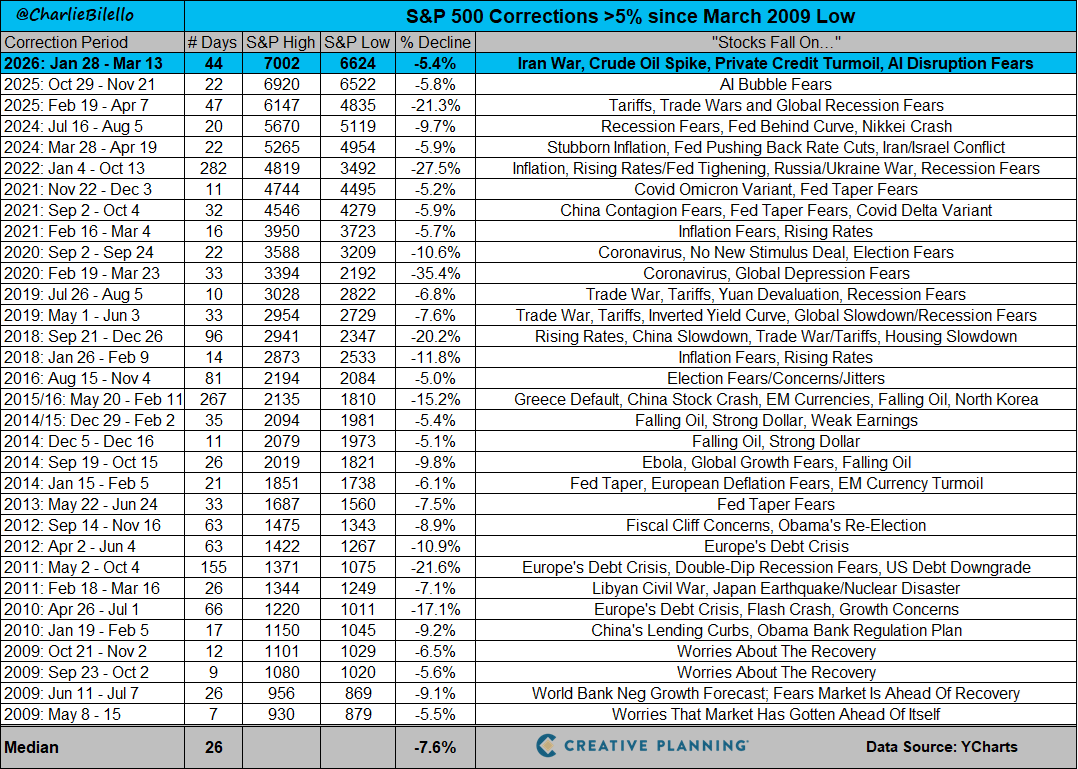
The message is short: this too shall pass. You can point out that there has not been a big drop since 2008-2009, but a big recession like back then only happens about twice a century or so.
During this period, there were some steeper drops. And don’t forget that this is the S&P 500. The Nasdaq dropped quite a bit more (almost?) each time.
3. Nasdaq bends the rules for SpaceX
By Kris
Multi SS linked to a very interesting article earlier today. It’s written by Keubiko, of whom I had never heard before, but the argument is convincing.
Nasdaq is trying to change the Nasdaq-100 rules to make it possible for a giant IPO like SpaceX to get into the index fast and at a rich valuation. The consequence for passive investors: they could end up buying massive amounts of stock at inflated prices while insiders get an easy exit.
As we all know, index funds have attracted trillions of dollars in investments now. Overall, that’s a good thing, but that now means indexes can move markets. And that’s what SpaceX wants. And it’s clear Nasdaq wants SpaceX, which is expected to be the biggest IPO ever, to list on the Nasdaq, not on the New York Stock Exchange. It’s even willing to bend the rules to obtain that goal.
One proposed rule would let very large IPOs enter the index after just 15 trading days. Another would let low-float stocks get index weights way of a bigger part of the total shares, not just those that can be traded.
But if there’s a tiny float and forced buying from index funds, that could cause the stock to skyrocket even before passive money gets involved. Market funds don’t buy based on a valuation but accept whatever the market gives them.
That’s how Nasdaq wants to get a better pitch to win big IPOs and the stock gets early index status, boosting the demand. Passive investors will be the victim.
The Return Of The Potential Multibaggers
Do you want to continue reading?
Do you want to focus on the fundamentals of growth stocks?
Take a subscription to Potential Multibaggers.
Go to this page.
Subscribe to the annual plan.