

Hi Multi 👋
I was on my way back home from Omaha from the Berkshire Hathaway annual meeting when I decided to write this article and did most of the writing. Today, the day after I arrived, I’m still jetlagged when I edited this, so I fell asleep multiple times, haha. But unlike for earnings articles, of which you will get a ton in the next few weeks, I didn’t need that much concentration, so I thought this was a good one before we go into the earnings madness.
The days in Omaha are often called the Woodstock for Capitalists, and if you haven’t been, you really can’t imagine how accurate that is.
Let me try to explain.
For one weekend a year, the entire city of Omaha is taken over by investors. 25,000 people flew in this year. And the meeting is just the headline act, the only one the press covers.
What they don’t write about is that there are dozens of side stages running all weekend. Bill Ackman speaks. Li Lu speaks. Mohnish Pabrai speaks.
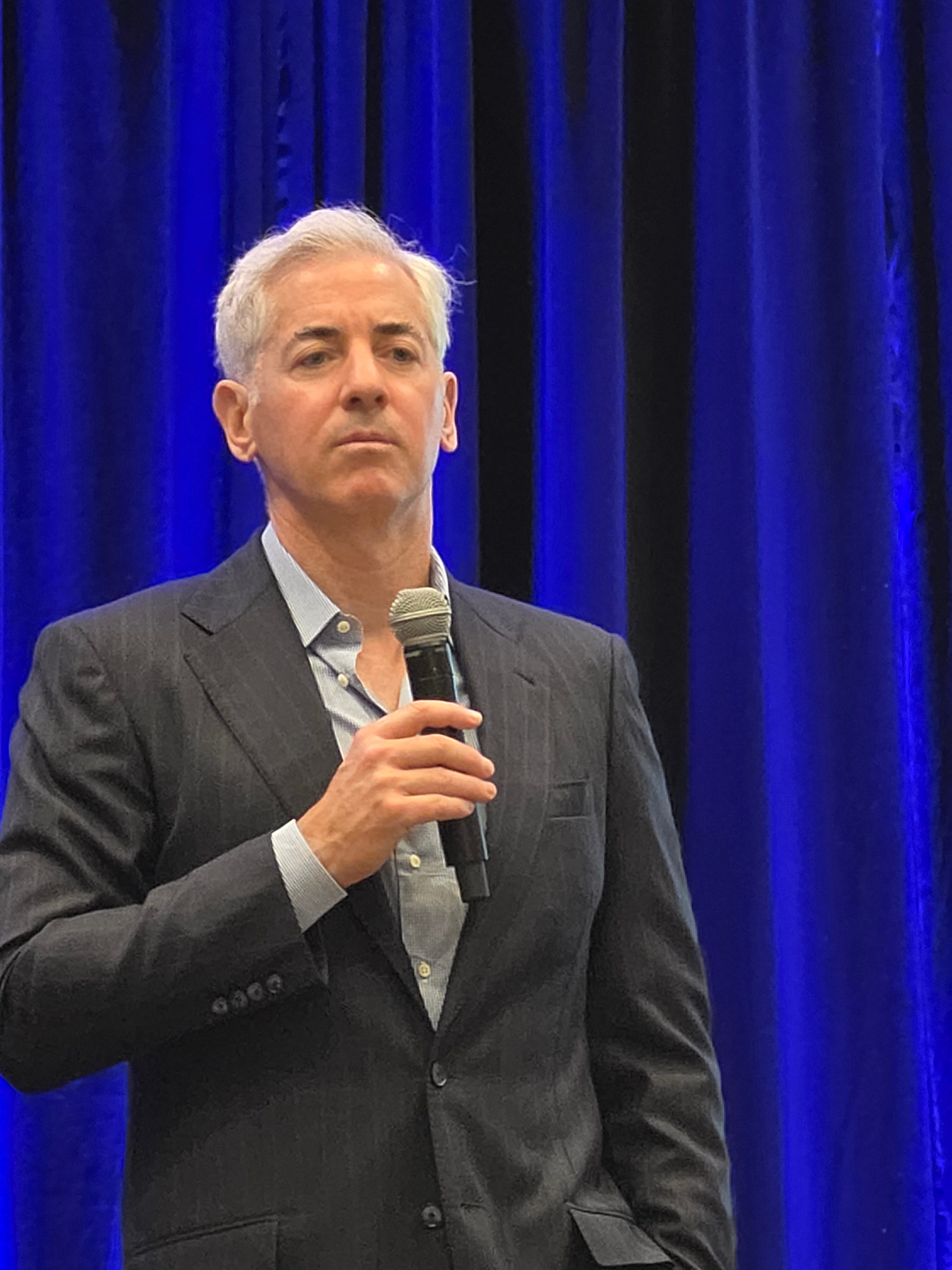
Picture taken by Kris
There are invite-only dinners with management teams, fund managers, and journalists. Thanks to my friend Michael Gielkens of Tresor Capitol, I could attend an intimate dinner with some members of the management and investors in a company I invest in, for example. Talking with management in that way is much more informal and often more insightful.
This year, Pieter Slegers and I co-hosted our own event with Brian Feroldi (an American investor we know well).
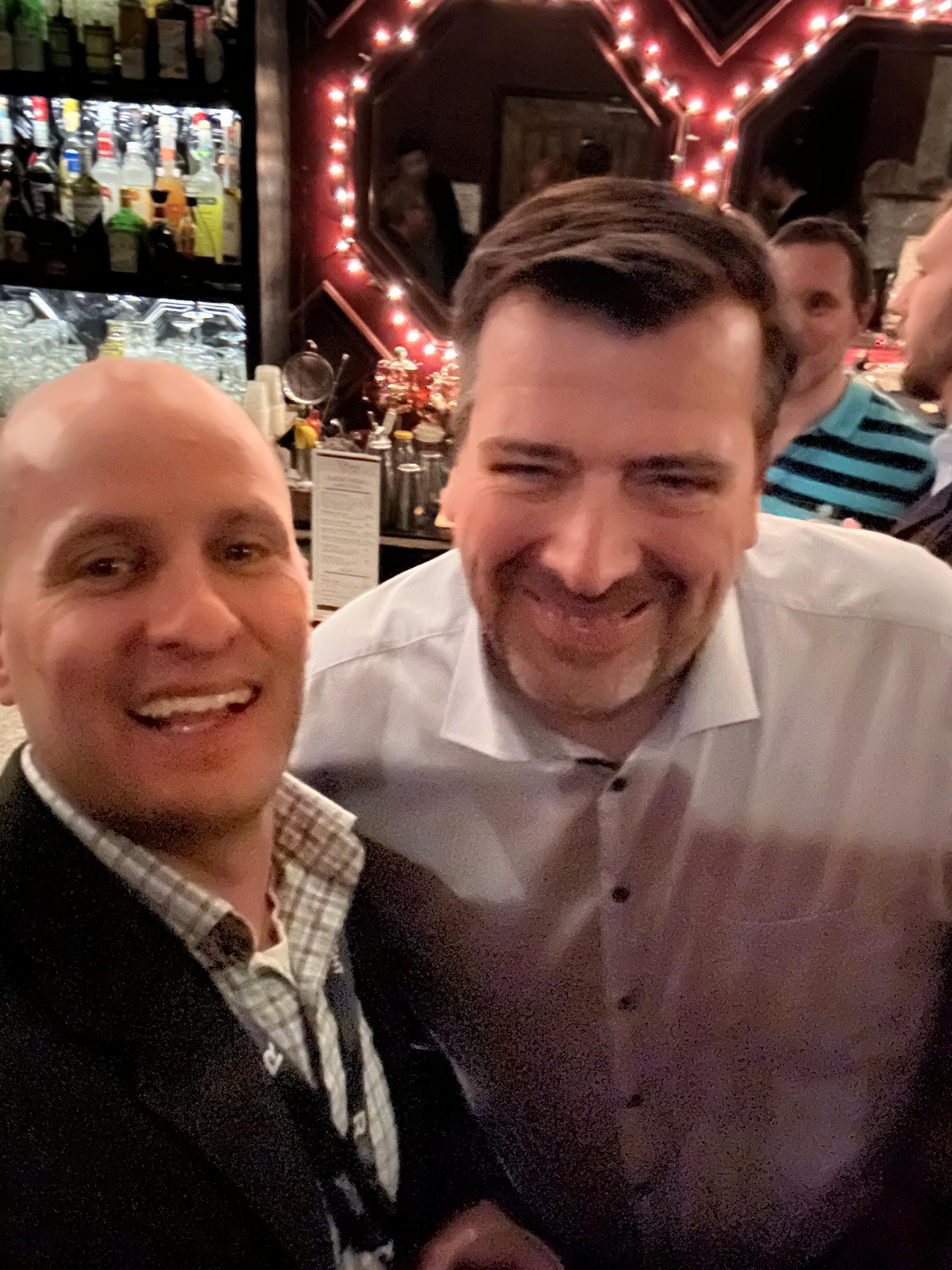
With Brian Feroldi, picture taken by Brian and shared with me
About 70 people showed up for our first edition and we all had a blast. Thank you for those who attended. To those who didn’t: next year again, probably again on Saturday evening (so don’t plan your flight back too early!).
Omaha, around the Berkshire AGM, is the only place in the world where you can run into multiple billionaire investors waiting in the coffee line with you or just answering questions from whoever walks into them. Here I am with Mohnish Pabrai, for example.
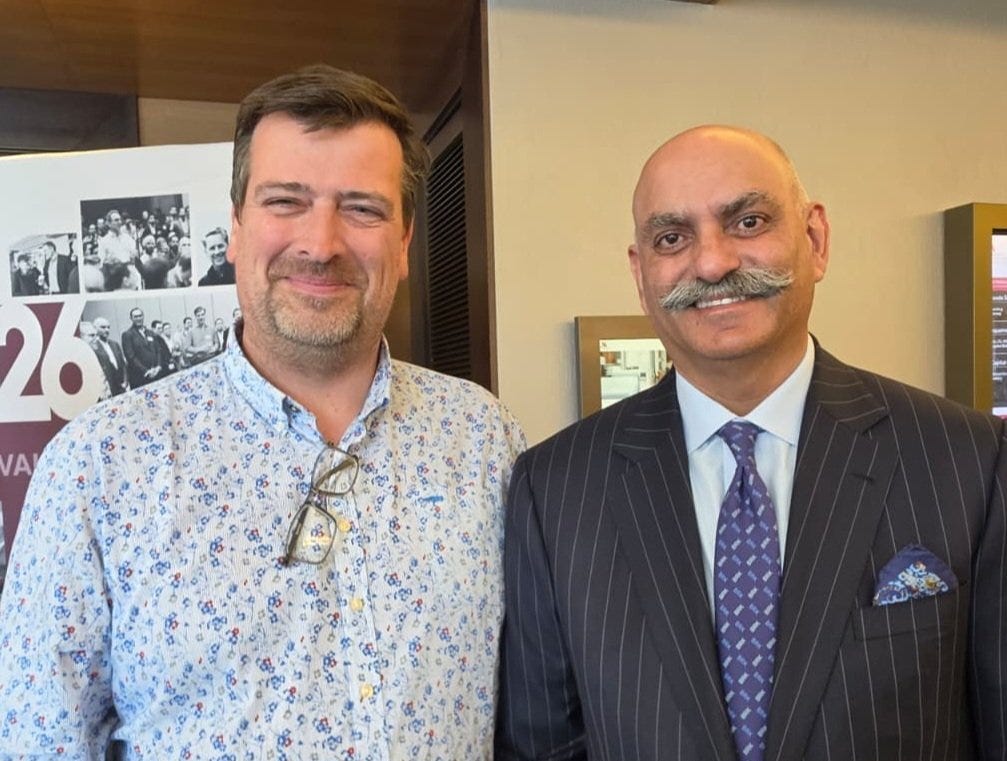
Picture taken with my own phone, but I forgot who I asked
So, if you think you can follow it all better at home, with the livestream of the AGM, you are missing most of the really good stuff. It’s not really a conference but a meeting of like-minded people and friends. One of my Belgian friends there phrased it perfectly: “All people here are friends or friends I don’t know yet.”
That’s why people like me fly almost 5,000 miles for it. That’s why this was my third time in a row, and I plan to go again next year.
This year was different from the previous years, as it was the first one without Buffett on stage. Greg Abel ran the show. Buffett, 95 years old, sat on the floor with the directors and spoke once. I took this picture of that moment.
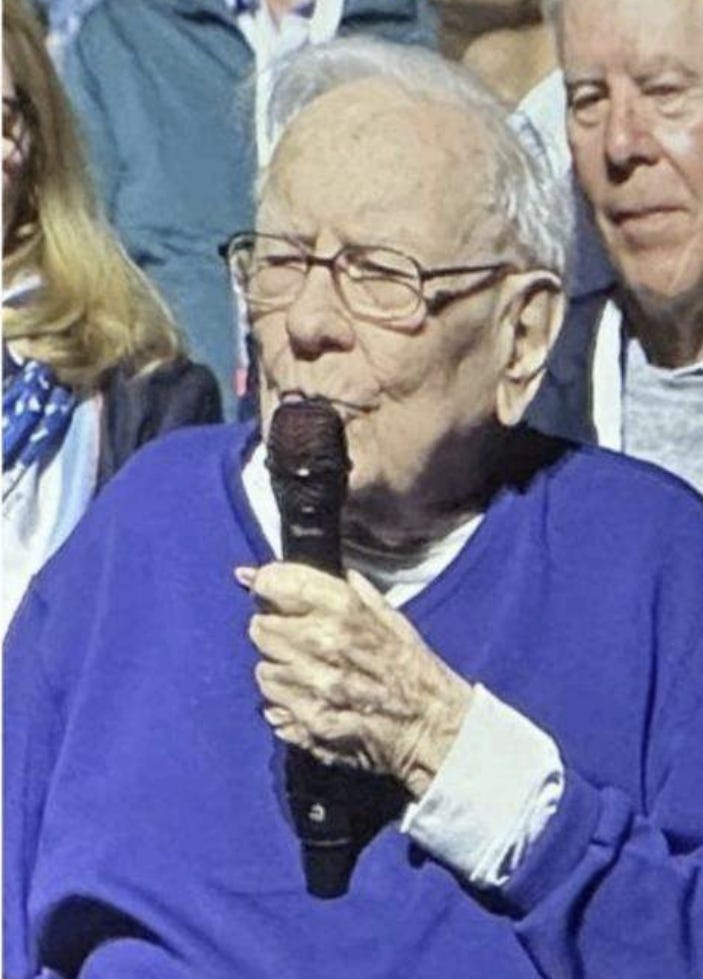
Picture taken by Kris
Takeaways from the AGM
Here are 5 takeaways from the weekend and the conversation that gave me my next stock idea.
1. Berkshire is sitting on $397 billion in cash.
This got the most press coverage. In a CNBC interview after the meeting, Buffett himself called the environment “not ideal” for putting it to work. And, as so often, he’s right… for Berkshire Hathaway.
Because Berkshire is too big. An acquisition or investment of $1B won’t move the needle for the company. But that doesn’t mean you can’t, as you probably don’t have $400B in your piggy bank. I know I don’t.
On top of that, Buffett never invests in tech. That’s why he will never have an investment like Nvidia, even if it has become the biggest company in the world. It limits what you can do with money now.
On top of that, many of Buffett’s typical investments, in energy and consumer staples, are very expensive now. Think of Walmart, Costco and oil companies.
2. Greg Abel passed his first test.
There’s no discussion. When it comes to charisma, Abel doesn’t reach Buffett’s ankles. Very few do, of course.
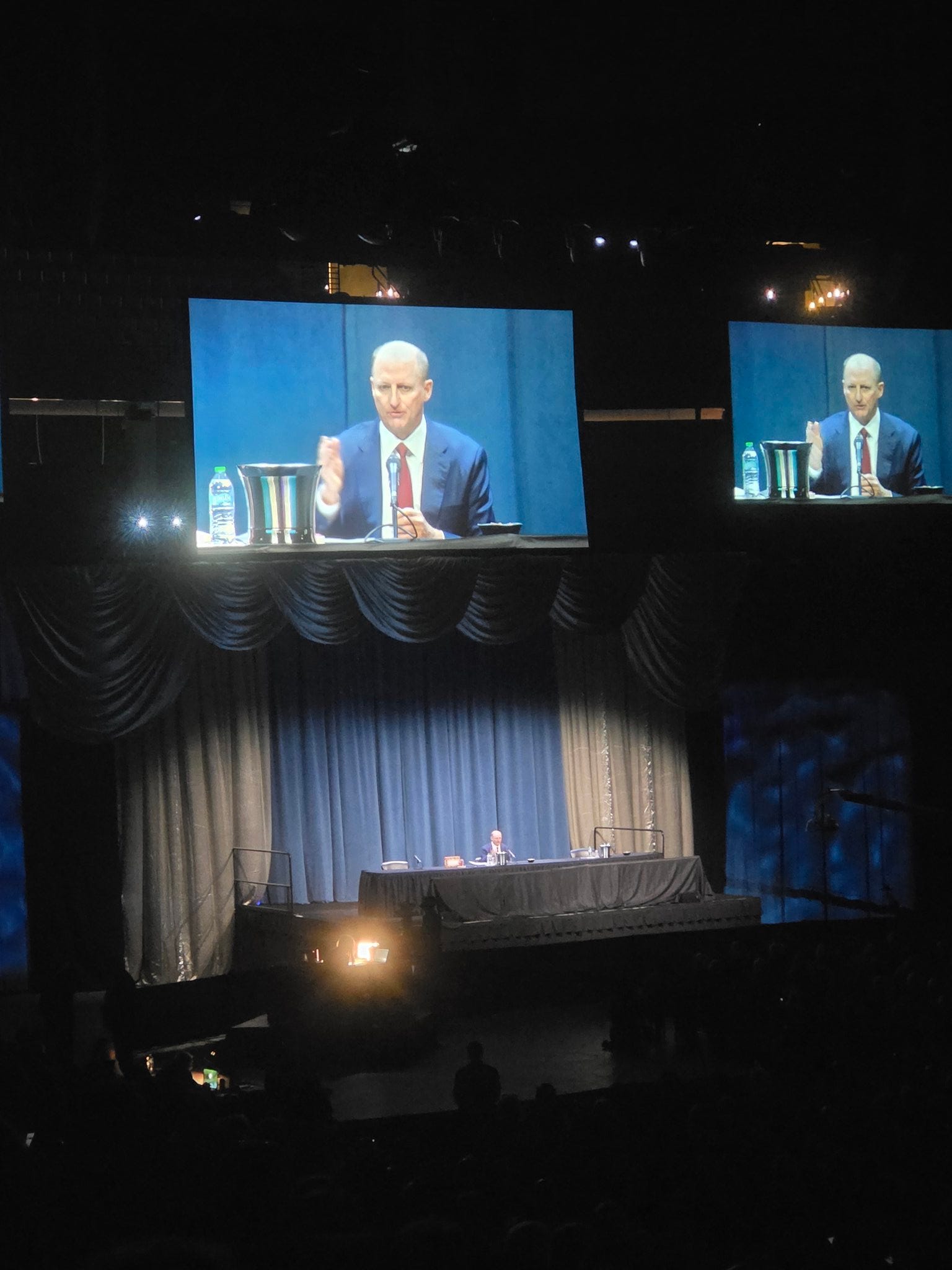
Picture taken by Kris
But he did a good job.
For example, in his presentation, he compared BNSF (Berkshire’s railroad) to the competition. Union Pacific. CSX. Norfolk Southern. BNSF lost on most of the metrics. I took a picture of this as well.
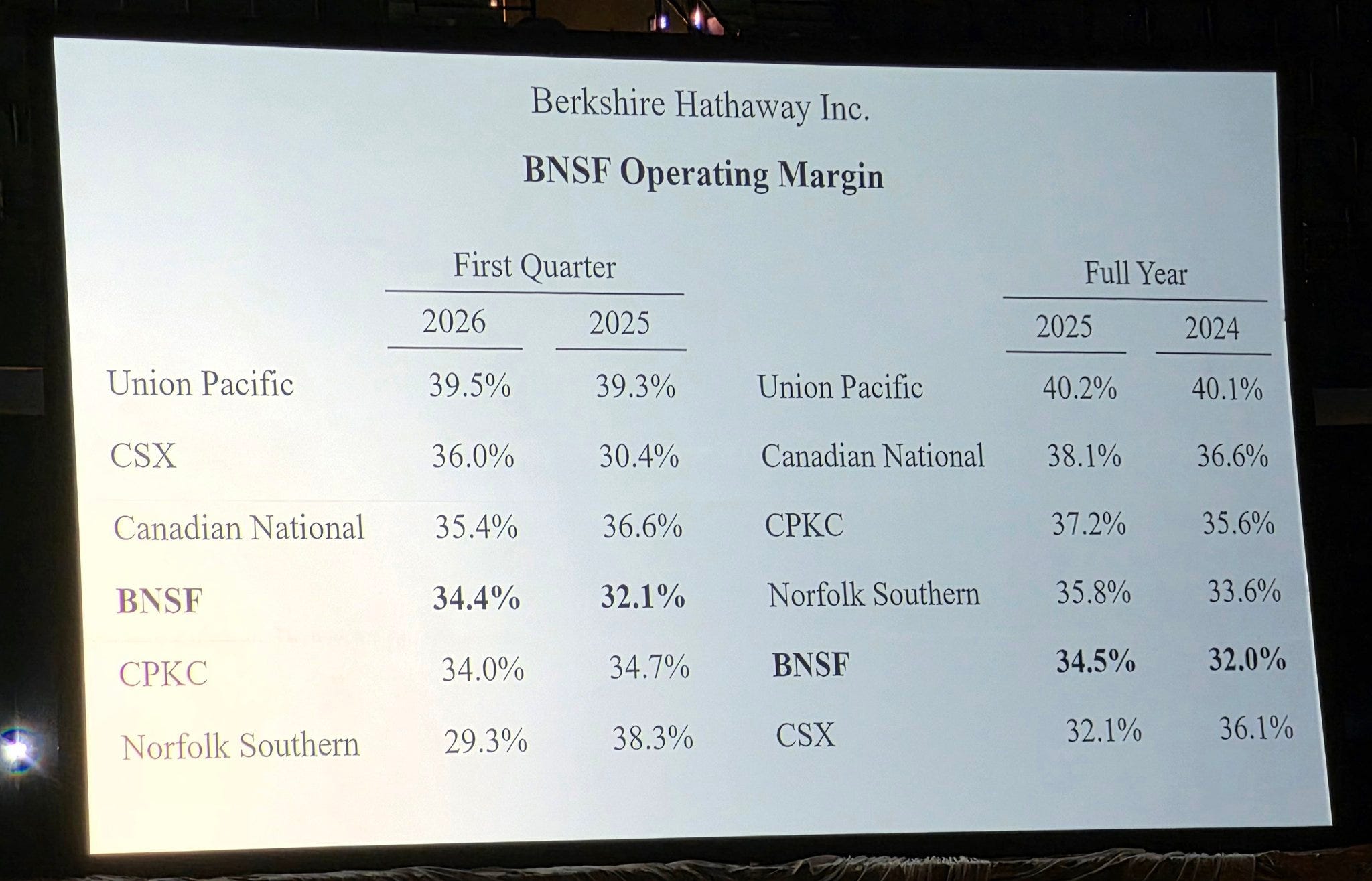
Picture taken by Kris
Saying this out loud in front of 25,000 shareholders, every financial journalist in the country, and a live CNBC broadcast… That takes guts.
“The gap to the industry’s best remains too wide.”
This is classic Buffett tradition. Buffett built Berkshire’s culture on brutal public honesty. The “mistakes” section in his annual letters is legendary. Most CEOs would only say something like that internally. Never in front of that many people.
The fact that Abel kept the tradition was deeply appreciated by the shareholders in the room. They understood that the image that was on the entry tickets, on so many t-shirts and other merchandise was really true: the legacy continues.
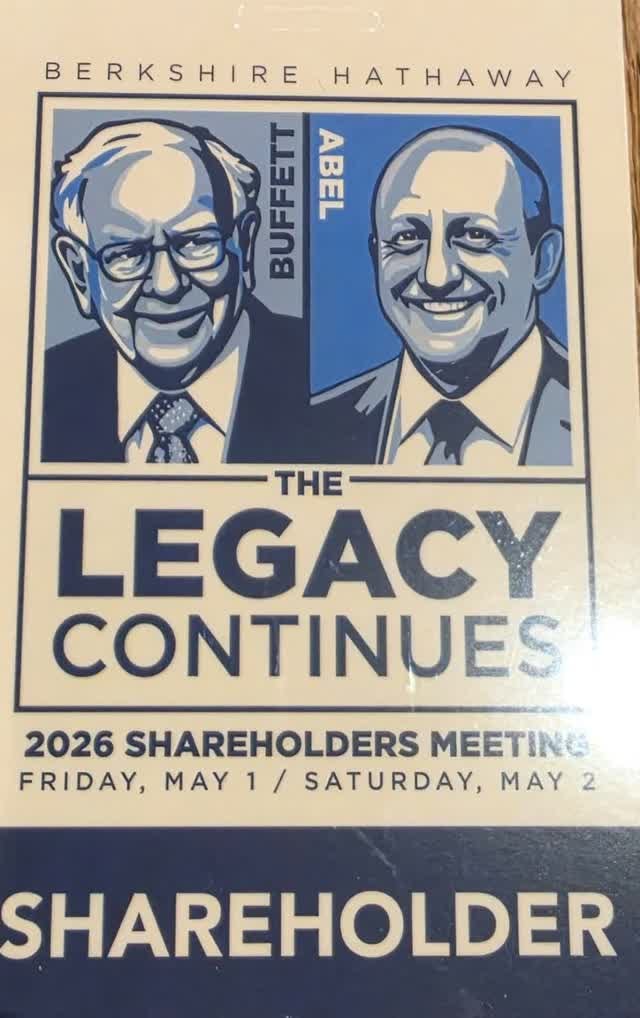
Picture of my Shareholder card to enter the AGM
On top of that, I got the feeling that Greg Abel might be exactly the CEO Berkshire needs right now.
Buffett is the greatest investor of all time. But operations were never really his focus. His approach was hands-off. He wrote in Berkshire’s Owner Manual:
Charlie and I are the managing partners of Berkshire. But we subcontract all of the heavy lifting in this business to the managers of our subsidiaries. In fact, we delegate almost to the point of abdication.
Unless management really messed it up, they let the businesses run themselves. That worked for decades.
But if you want BNSF’s trains to run on time, hands-off is probably not enough anymore. Abel has 15 years of operational experience running Berkshire Hathaway Energy. He knows how to move the needle inside an operating business.
Tim Cook, Apple’s CEO, who recently announced he would retire, was in the room, just like in previous years. He was thanked extensively and praised for what he had done for Apple and, therefore, for Berkshire Hathaway.
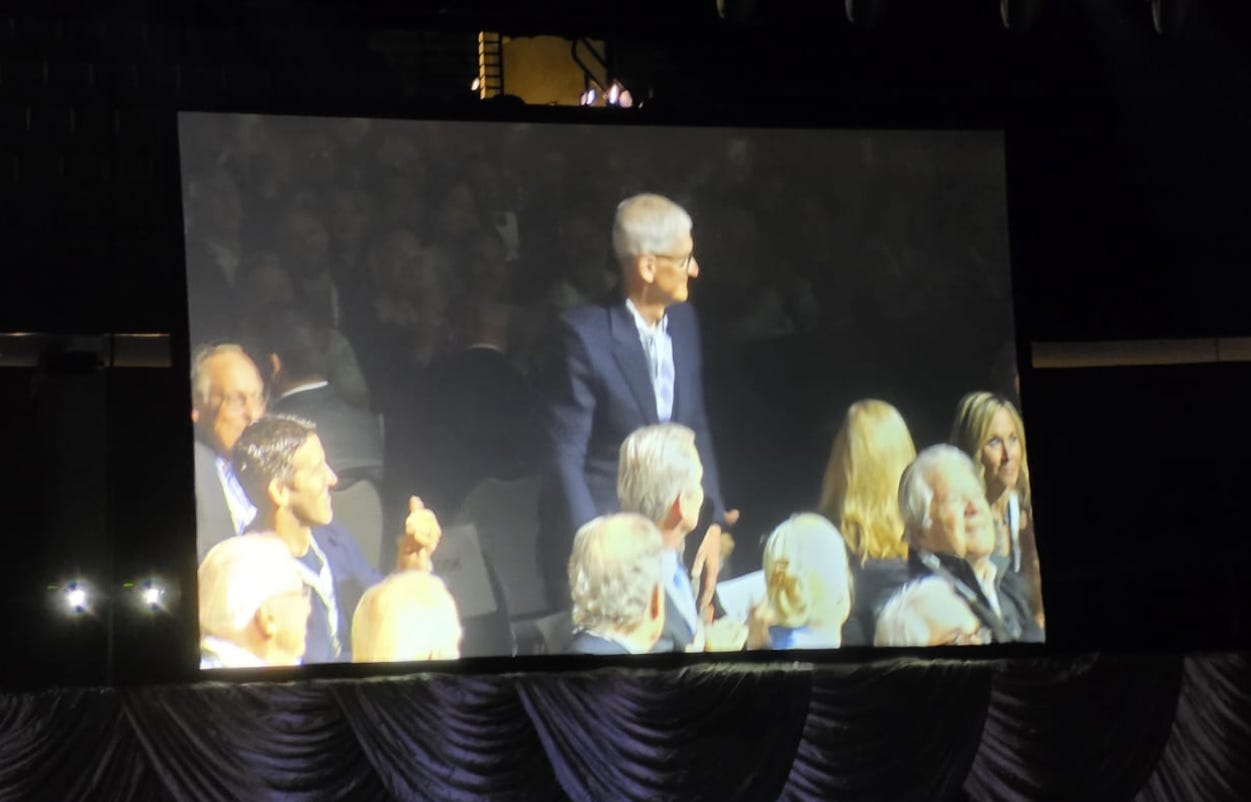
Picture taken by Kris
The parallels with Cook’s story and that of Greg Abel were too obvious to ignore: Tim Cook took over from Steve Jobs. Just like Warren Buffett, Jobs was a genius and nobody thought Tim Cook could do well at the helm of the company. But he did an amazing job, creating significant wealth for Apple shareholders.
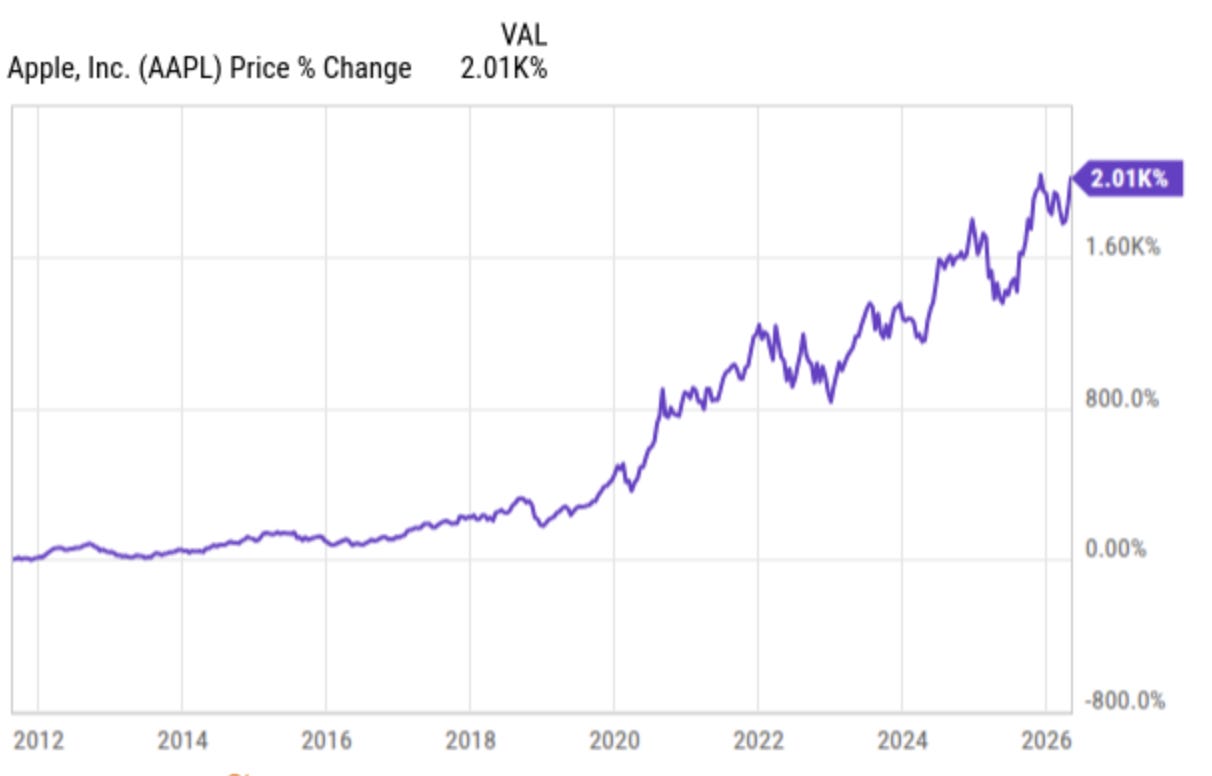
Buffett still has his say in how to allocate the capital and Abel also focuses on the operations. That’s a much stronger Berkshire than before, I would argue. Don’t forget that Abel also has investment experience, albeit mostly in the energy sector. And there’s still also Ted Wechsler.
3. The deepfake moment.
The Q&A session opened with a video on the giant screens. A man in a suit, claiming to be “Warren, from Omaha,” asked the first question in the Q&A. And that Warren looked pretty familiar.
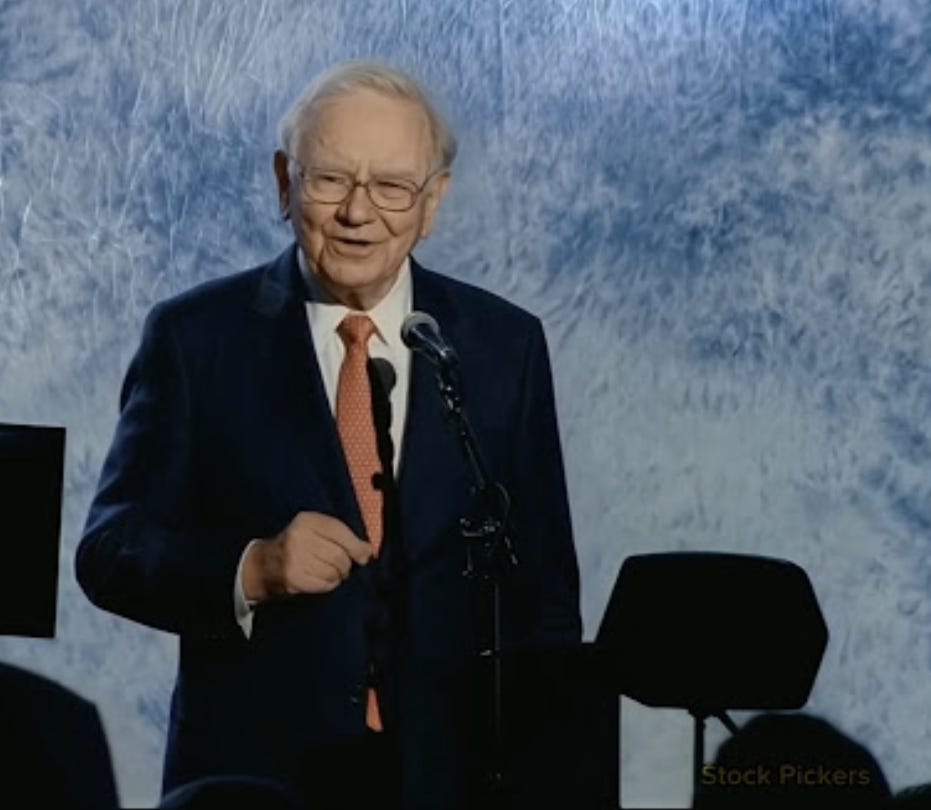
He asked Abel:
“I’m 95 years old now and have nothing but time and Cherry Coke. Why should shareholders hold Berkshire stock for the long term?”
Abel later revealed that the video was an AI-generated deepfake of Buffett, made without Buffett’s knowledge or authorization.
He turned it into a 5-minute lesson on cybersecurity risk, because it’s a risk Berkshire’s insurance subsidiaries deal with every day.
It was probably the most viral moment of the entire weekend. And at the same time, it’s probably a good indication that the AI opportunity is seen by every single company in the world. The threats are real but the defenses are a multi-billion-dollar opportunity.
Cybersecurity stocks just got more relevant. And of course, at Potential Multibaggers, we are long-term shareholders of companies like CrowdStrike and Cloudflare, that benefit from this and will even more in the future.
4. Buffett, at 95, is still in the office every day.
Abel said it on stage: Buffett still comes in every single day. They talk about the investments and companies almost every day. That message was important for shareholders, but it is also consistent with what Buffett has said in the past: “I tapdance to work every single day.”
5. The real value of the weekend isn’t the main meeting. It’s the conversations.
This is the part most people don’t understand until they go. I talked to the chairman of a company I invest in, I could listen to Mohnish Pabrai’s thoughts on Constellation Software, I could talk to other investors about the bull and bear cases of multiple Potential Multibaggers, exchanged ideas on AI with some of the best portfolio managers in the world, etc.
You don’t get that on a 10-K. You don’t get it from a quarterly call or a Zoom call with experts. You get it from being in the room and asking the questions.
This is exactly what Berkshire weekend is for. It’s not about the pitches, it’s about background and context.
And it’s not just about company management; it’s also about other investors, newletter writers, fund managers, analysts and other investing professionals. We always go with a group of Belgians and Dutch professionals. Michael Gielkens of Tresor Capital talked to Mark Miller, the new Constellation Software CEO.
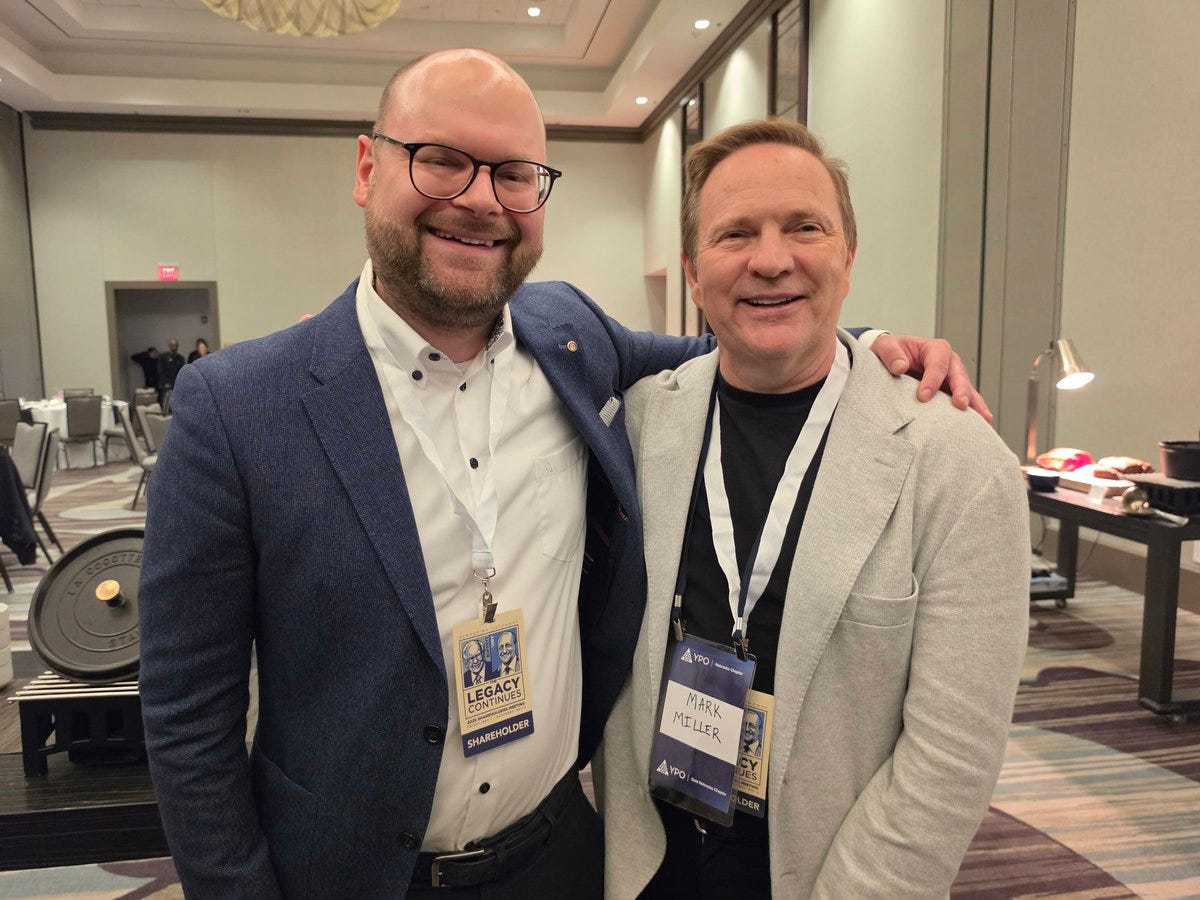
Picture: Michael Gielkens
So, I could talk to Michael about Constellation, Topicus and many other serial acquirers and holding companies. He’s one of the best in the world in that specialism. This is his X profile.
Pieter Slegers from Compounding Quality was also in our group. Pieter is one of my best friends but it’s still different if you see each other in real life than if you just talk on the phone (which we do a lot).
But I can’t focus on everyone I met there. It’s just impossible. I enjoyed conversations with Brian Feroldi, Brian Stoffel and Brian Withers from Long-term Mindset, corporate communications expert Jurgen Vluijmans, Kevin from 100 Bagger Hunting, business owners and extremely knowledgeable investors who don’t want to be named here, Guy Spier’s ValueX community, my friend Vitaliy Katsenelson, who hosted more than 1,000 people at his Sunday morning breakfast, and who invited me to a Jeffersonian dinner with author Luca Dellanna and only a dozen of other people. And that’s just the tip of the iceberg.
That’s the real value of Omaha around the Berkshire meeting. If you want to experience that, be there next year and come to our event and you’ll see what I mean.
In the meantime, keep growing!
Subscribe for free (or paid for much more stock coverage).
Looking forward to the earnings analysis of SHOP, MELI, TTD, AXON, DUOL, etc....
Great read .... I will try to join you next year!